

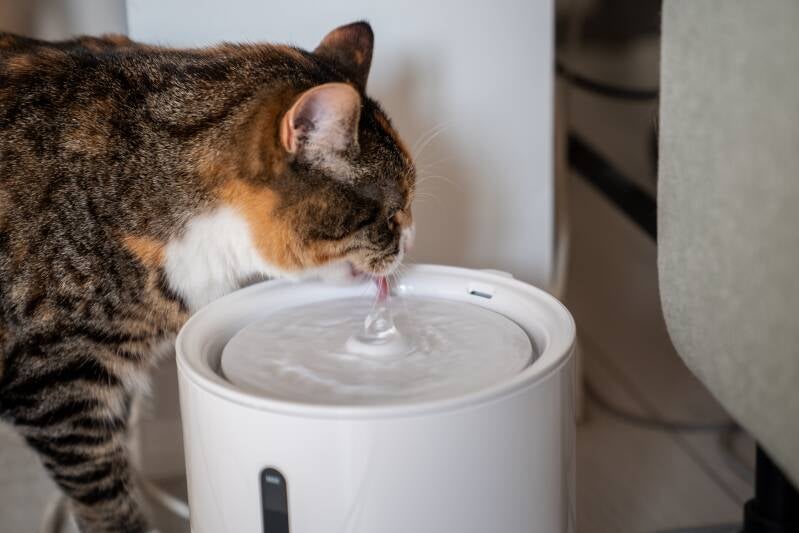
The big cats in the wild—lions, tigers, leopards, and cheetahs—get their drinking water from streams. (And they’re the cool cats, after all. Your cat likes to pretend it’s one of them.)
Water that’s moving is fresher than water in ponds and lakes—and it smells better. Water that doesn’t move is stagnant, filled with bacteria, and gross!
Your house cat is a mini-version of a big cat. It also prefers moving water. It will appreciate a cat fountain because the water in it smells and tastes good.
A cat fountain may also improve your cat’s physical and mental health.
Most cats drink more water if it’s in a fountain. The moving water entices cats to drink it.
Cleaner Water
The water in a cat fountain is cleaner than the water in a bowl. Cat fur, dirt, and dust quickly accumulate in a water bowl. A cat fountain, on the other hand, has a filtration system that removes particles and odors from the water.
Bacteria can accumulate in a water bowl, making it smell and taste bad. This is especially true if the water isn’t changed every day.
Have you ever caught your cat drinking water from a toilet? Although the toilet itself might not be clean, the water is—and it’s moving. A cat has a great sense of smell. If the water in a toilet smells cleaner than the water in a bowl, your cat will drink it.
Relaxation
You’ll feel calmer if you listen to the trickling water in a stream or a fountain. The same is true for your cat. Cats are prone to stress, and the sound and sight of moving water can reduce their anxiety.
Some cat parents worry that the running water in a fountain might be loud enough to scare their cat. However, most cat fountains are quiet. The water trickles, and cats enjoy this sound.
Types of Cat Fountains
Cat fountains come in many shapes and sizes. They also vary in price. The cheaper ones cost around $20, while more elaborate ones can cost more than $200 (gasp!).
Many types of cat fountains are available. Choose one you think your feline companion will like.
Ceramic Cat Fountains
Our cats like the kind of ceramic fountain that has only a small spout, so the water gently trickles. This type of fountain is very quiet. It seems boring to me, but our cats (and dogs) love it.
The tank separates from the bottom part—the part with the plug—so you can pick up the tank and fill it without getting the electrical part wet. There are also wireless models.
Ceramic fountains cost about $50–$60. You can purchase one from Amazon or Chewy.
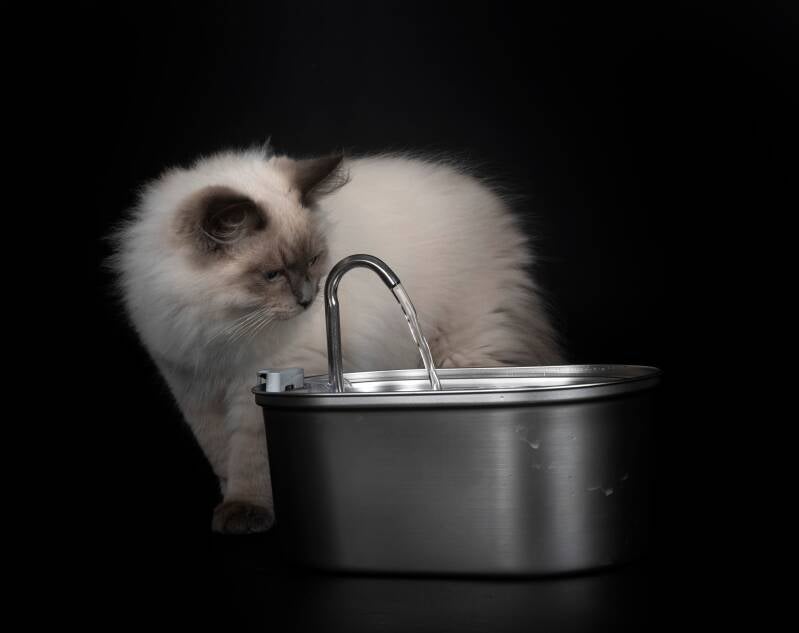
A stainless-steel cat fountain
Health Benefits
Are you hydrated? If you are, your body has enough water to function properly. To stay healthy, you need to drink plenty of water every day.
The same is true of your cat. Water is essential for good health. It prevents kidney stones, urinary tract infections, and many other ailments.
Drinking lots of water is especially important for cats that eat only dry food. While wet food contains water, dry food does not. Drinking an adequate amount of water is especially important for senior cats, who tend to drink less because they can’t smell or taste as well as younger cats.
Stainless-Steel Cat Fountains
Some stainless-steel cat fountains have a heavy stream of water. Our cats like to stick their heads under the faucet part and soak their faces. Stainless-steel fountains are easy to fill and clean. Some have a front window that lets you see when the water level is low.
They cost about $35 and are available at Amazon and Chewy.
Plastic Pet Fountains
Cat fountains made of plastic are usually inexpensive, only about $20. Most have a clear tank so you can see the water level. Plastic cat fountains are more likely to harbor bacteria than ceramic or stainless-steel cat fountains, so be sure to clean them thoroughly and often.
ThirstyCat Fountains
These ceramic cat fountains are beautiful, quiet, and, according to the website, last a lifetime. They have a pump and a filter and come with a warranty.
They seem great—but I don’t know for sure because they’re out of my price range. Many cost about $200, but really fancy ones cost $500 or more.
They’re exquisite and one of a kind. Ah, well. I can dream.
Types of Water
I have a confession to make. Before I started researching this topic, I never even thought about the best kind of water to put in our cats’ fountains and bowls. We filled them with tap water.
After reading about what’s actually in tap water—minerals, chlorine, and fluoride—using filtered or bottled water makes sense.
These options are much better for pets than tap water:
- Spring water
- Bottled water
- Distilled water
- Filtered water
Maintenance
Cat fountains need to be taken apart and cleaned. This prevents the buildup of harmful bacteria.
It is especially important to clean plastic fountains because they are more likely to contain harmful bacteria than ceramic and steel fountains.
The surface of a cat fountain occasionally becomes slimy. This may be from a cat’s saliva or bacteria. Wash it with dish soap and warm water.
We clean our cat fountains about once a week and wash or replace the filters when they become dirty.
Common Concern
What if you buy a fountain, assemble it, and your cat refuses to use it? Be patient. Your cat may be afraid of the fountain at first. Give the cat time to get used to the fountain and realize that it’s harmless and can be fun, like a toy.
Try moving the fountain to a familiar place. We have a fountain near the food bowls in the kitchen. Place some treats near the fountain to entice your cat to use it.
A Final Word
A cat fountain is great for your cat, but your cat can live a long, healthy life without one. Maybe you can’t afford a cat fountain or don’t want one for another reason.
If this is the case, give your cat more than one water bowl. Change the water in the bowls daily. Use spring water or distilled water whenever you can. Spring water costs about $2 for a one-gallon jug.
As a special treat, let your cat drink its water from a glass now and then. Remember to hold the glass. Otherwise, your cat will purposely tip it over. Cats are cats, after all.