


My family and I live in Northeastern Pennsylvania. It’s beautiful here, but winters can be brutal, with frigid temperatures, biting wind, and lots of snow and ice. If we’re lucky, we get a Nor’easter or two. (That’s sarcasm, folks.) These nasty storms bring heavy snow and blizzard-like conditions.
If we suffer during brief outdoor excursions, how do feral cats manage? Amazingly, they do, even though they’re outside 24/7.
You can make their lives easier by taking these steps:
- Build a feeding station.
Feeding stations are places that keep food, water, and cats safe from the elements. A feeding station doesn’t have to be fancy. You can make one using a plastic tub, Styrofoam, and straw.
Check out these instructions from Alley Cat Allies, https://www.alleycat.org/wp-content/uploads/2014/10/FactSheet_FeedingStation_2017.pdf.
You can also buy a feeding station. Make sure it’s large enough for food, water, and a cat to fit inside. Feeding stations are available at Amazon and Chewy.
- Give them extra food and water.
Feral cats need more energy in winter to combat the cold. So, they need more food than usual. Wet food is a good option. It’s easy to digest, so it requires the least amount of energy. We give our community cats both wet and dry food, just to make sure they have enough to eat.
Natural water sources freeze in winter, so it’s important to give feral cats plenty of water. Give ferals water in heated cat bowls. (You can purchase these at Amazon or Chewy.) If you can’t do this—there might not be an outlet where the cats are fed—use bowls that are deeper than they are wide. Use plastic bowls instead of metal bowls, unless the metal bowls are heated. Plastic doesn’t get cold as quickly as metal does.
A year-round water fountain or a running spigot works well in cold weather, too. Water doesn’t freeze as quickly if it’s moving.
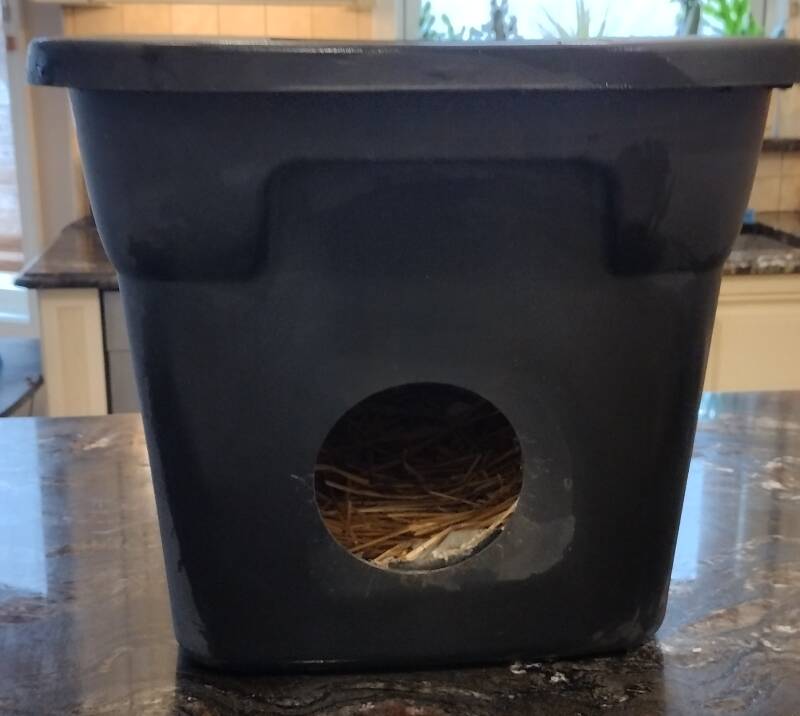
- Provide outdoor cat shelters.
If properly built, outdoor cat shelters should protect feral cats from the cold. If you’re going to build one yourself (see https://www.alleycat.org/wp-content/uploads/2014/10/FactSheet_FeedingStation_2017.pdf), keep these points in mind:
- Keep it small. Small spaces hold in heat better than large spaces.
- Never use hay, blankets, or towels. They soak up moisture and can make a shelter wet and cold. Cats can freeze to death if they get wet in cold weather. Use straw inside shelters instead. Remember this saying: “Hay is for horses. Stray is for strays.”
- Elevate shelters at least 6 inches off the cold ground.
- Create a small opening. A cat should be able to fit inside the hole, but a raccoon should not.
- The opening should face away from the wind.
If a feral cat isn’t using a shelter, be patient. Some cats need to get used to the presence of a shelter before using it.
However, if a few weeks pass and a cat still isn’t using the shelter, try the following:
- Add a second door, if possible. Feral cats are afraid of people. Some won’t spend time in a shelter with only one door because they can’t escape from it if it gets blocked. If you add a second door, it should be away from the first. For example, if the first door is on the front of the shelter, add the second door on the back.
- Try to entice the cat to get into the shelter using catnip or cat treats. Put the catnip or treats right inside the door, so the cat can get it by sticking its head inside the shelter. Hopefully, the kitty will notice that it’s warm and dry in the shelter and go inside it.
- If you bought a shelter and it has a flap or cover over the door, take it off. A feral cat needs to be able to easily enter and exit a shelter.
- Make sure the shelter is in a quiet place that’s away from people.
- If you can, try more than one type of shelter. We have a few feral cats that sleep in a heated house but won’t go into the homemade shelters. However, other cats prefer homemade shelters.
- Keep the cats safe.
Do the following to make sure feral cats are safe in winter:
- Check under the hood of your car before starting the engine. Cats and other animals may seek warmth inside engines. Also, check your car’s wheel wells.
- Don’t use antifreeze near the cats. It’s toxic. Don’t use rock salt, either. They’ll walk on it and lick it off their paws. Most pet stores have animal-friendly deicers.
- Don’t do TNR (trap, neuter, and return) when it’s very cold outside. If it’s too cold for you to stay outside for more than a few minutes, it’s too cold for TNR. If you must trap a sick or injured cat in cold weather, don’t leave the trap unattended. A cat can quickly get frostbite or even freeze to death in a trap.
- Don’t trap feral cats and bring them inside your home or to an animal shelter in cold weather. They’re afraid of people, so such an experience is traumatizing. Also, be aware that most animal shelters euthanize feral cats.